
MOVEMENT IS THE PRACTICE. YOUR LIFE IS THE REASON.
Strength with Edge. Elegance in Motion.
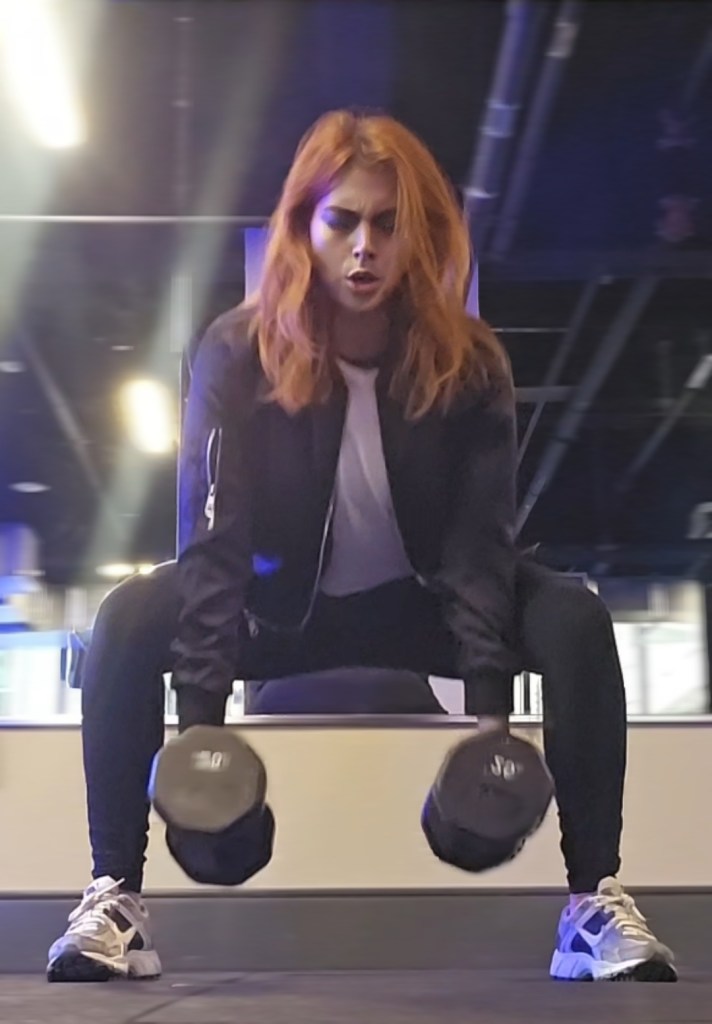
Your body doesn’t exist separately from your life.
It carries you through demanding schedules, unexpected changes, responsibilities, relationships, and the ordinary moments that require more energy than anyone sees.
The ASCEND Method™ brings together physical training, music-led movement, and practical self-awareness to help women develop strength they can use, routines they can sustain, and a more intentional relationship with their bodies.
Not every session needs to push you to your limit.
Not every form of progress can be measured in pound or repetitions.
The purpose is to develop your capabilities through a practice that respects both your ambitions and your circumstances.
TRAIN THE SIGNAL. THE BODY FOLLOWS.
FOUR PRINCIPLES. ONE CONNECTED PRACTICE.
MOVEMENT • STRENGTH • COMPOSURE • INTENTION
These aren’t four separate programs.
They’re four principles that inform how we approach movement, respond to physical challenges, recognize our needs, and build consistency.
Each has a distinct purpose. Together, they create a framework that can be adapted to different levels of experience, interests, and goals.
01 / MOVEMENT
FIND YOUR RHYTHM. DEVELOP YOUR RANGE.
Movement is where we begin building familiarity with the body.
Through cardio, dance-inspired sequences, mobility, and rhythm-based exercises, we explore different ways to move with greater coordination, confidence, and control.
Music can provide structure, enjoyment, and a natural reference for timing. It also creates opportunities to practice attention, transitions, and movement quality.
IN PRACTICE
- Explore walking, cardio, and dance-based movement.
- Develop coordination through accessible rhythmic sequences.
- Adjust pace and intensity to your current ability.
- Notice breathing, posture, and physical effort.
- Discover forms of movement you genuinely enjoy.
BEYOND THE SESSION
The goal isn’t to perform every moment perfectly. It’s to become more comfortable participating, adapting, and returning to movement consistently.
Your rhythm doesn’t have to resemble anyone else’s to be worth developing.
02 / STRENGTH
BUILD CAPACITY. RESPECT THE PROCESS.
Strength is developed through appropriate challenge, sound technique, and recovery.
Using resistance exercises, bodyweight movement, dumbbells, bands, and other suitable equipment, we work toward greater physical capability through gradual progression.
Rather than treating intensity as the measure of a successful workout, we pay attention to how a movement is performed, whether the challenge is appropriate, and what the body needs to progress.
IN PRACTICE.
- Learn foundational movement patterns.
- Develop control, stability, and muscular strength.
- Practice appropriate resistance and repetition ranges.
- Understand the importance of rest and recovery.
- Recognize progress beyond appearance alone.
BEYOND THE SESSION
Strength training offers a practical opportunity to experience challenge, evaluate your approach, make adjustments, and recognize improvement over time.
The aim is not to make every task effortless.
It’s to build greater capacity for the demands you choose to meet.
Strength isn’t proven by carrying the heaviest load. It’s developed by learning how to carry one well.
03 / COMPOSURE
NOTICE YOUR STATE. CHOOSE YOUR NEXT MOVE.
Composure isn’t the absence of emotion.
It’s the practice of becoming more aware of your physical and emotional responses so you can approach a situation with greater intention.
During movement, you may notice changes in breathing, muscle tension, attention, frustration, or confidence.
These observations can become useful opportunities to practice self-awareness.
We incorporate simple, nonclinical exercises that encourage participants to notice their experiences, adjust effort when appropriate, and respond thoughtfully.
IN PRACTICE.
- Observe changes in breathing and physical tension.
- Notice how you respond to unfamiliar movements.
- Practice slowing down when technique requires attention.
- Recognize the difference between productive effort and unnecessary strain.
- Use brief moments of reflection before and after movement.
BEYOND THE SESSION
The same habit of noticing before responding may be useful when transitioning between responsibilities, approaching a difficult task, or recognizing that you need a moment to reset.
The goal is not permanent calm or perfect emotional control.
It’s greater awareness and a wider range of deliberate choices.
You don’t have to control every circumstance to become more thoughtful about your response.
04 / INTENTION
MAKE YOUR PRACTICE FIT YOUR LIFE.
A routine is only useful if you can realistically participate in it.
Your responsibilities, energy, experience, resources, and interests all matter when deciding where to begin.
Intention means identifying a meaningful goal, choosing manageable actions, and adjusting your approach as you learn.
Some seasons allow for greater intensity. Others require a simpler routine.
Both can be approached purposefully.
IN PRACTICE.
- Identify realistic movement goals.
- Consider your schedule and available resources.
- Establish manageable routines.
- Reflect on participation and progress.
- Adjust your practice when circumstances change.
BEYOND THE SESSION
You begin to develop a more sustainable approach to consistency—one that allows for preparation, flexibility, and recovery without turning every interruption into a failure.
Discipline isn’t the refusal to adjust. It’s the commitment to keep finding a way forward.
HOW THE PRINCIPLES WORK TOGETHER
ONE SESSION. MULTIPLE OPPORTUNITIES TO DEVELOP.
Imagine you’re learning a new resistance exercise.
MOVEMENT helps you understand the pattern and coordinate your body.
STRENGTH introduces an appropriate challenge and a way to develop capacity over time.
COMPOSURE encourages you to notice tension, frustration, or changes in breathing without rushing through the exercise.
INTENTION helps you decide how the movement fits your goals, experience, and routine.
Nothing mystical. Nothing unnecessarily complicated.
Just a thoughtful way to approach physical training that recognizes the person performing it.
The principles can also guide a music-led cardio session, a beginner strength routine, or a simple movement practice at home.
THE METHOD IS A FRAMEWORK, NOT A FORMULA.
WHAT MAKES THE ASCEND METHOD DIFFERENT?
THE PERSON COMES BEFORE THE PROGRAM.
Two women can perform the same exercise and have completely different experiences.
One may be learning to trust her coordination.
Another may be returning to movement after a demanding season.
Another may already be physically active but struggle to establish consistency.
Their needs aren’t interchangeable.
That’s why the ASCEND Method™ begins by understanding the woman, rather than assuming every woman needs the same approach.
WE CONSIDER:
- Your movement experience and current abilities.
- Your goals, preferences, and interests.
- Your schedule and everyday responsibilities.
- The equipment and resources available to you.
- What helps you participate consistently.
- Where adjustments or additional support may be appropriate.
The method combines athletic structure with the flexibility to recognize individual circumstances.
Not a performance of empowerment. A practical investment in capability.
THE ROLE OF MUSIC
RHYTHM WITH A PURPOSE.
Music is one of the distinguishing elements of GIGI ASCEND.
It can make movement more enjoyable, provide a sense of timing, and create an accessible way to explore coordination and expression.
But music isn’t used simply to make a workout entertaining.
Depending on the activity, rhythm can help organize movement, support pacing, or provide a reference for transitions.
Some sessions may be energetic and dance-driven.
Others may require slower, more focused movement.
And some exercises are best performed without following a beat.
THE MUSIC SERVES THE MOVEMENT. THE MOVEMENT SERVES THE PERSON.
WHAT PROGRESS CAN LOOK LIKE
NOTICE WHAT YOU’RE DEVELOPING.
Progress isn’t limited to a before-and-after photograph.
Depending on your starting point and goals, it may include:
- Performing an exercise with improved technique.
- Building muscular strength or cardiovascular endurance.
- Becoming more comfortable with coordinated movement.
- Developing a routine that fits your schedule.
- Recognizing when your body needs recovery.
- Feeling more prepared to participate in physical activity.
- Learning to make thoughtful adjustments rather than abandoning your goals.
These are areas we can work toward, not guaranteed outcomes.
Your progress is personal, and your experience will depend on many factors, including participation, circumstances, and individual needs.
We measure what matters to your goals—not simply what looks impressive from the outside.
GUIDED BY GIGI
ATHLETIC DISCIPLINE. INDIVIDUAL ATTENTION.
My role is to guide you through movement with attention to your experience, your capabilities, and the goals you’re working toward.
I bring together my experience in dance, fitness instruction, and music-led movement with a practical interest in how women develop confidence, consistency, and self-awareness.
I don’t believe a session needs to be intimidating to be meaningful.
I believe in clear instruction, appropriate challenges, thoughtful adjustments, and creating space for women to learn through experience.
The ASCEND Method™ reflects that philosophy.
It is movement guidance, not psychotherapy, medical treatment, or a substitute for care from a licensed health professional.
My aim isn’t to make you dependent on my presence. It’s to help you develop a practice you can understand, participate in, and increasingly take ownership of.
BEGIN WITH THE ASCEND BLUEPRINT
YOUR STARTING POINT DESERVES ATTENTION.
Before deciding what your movement practice should look like, we begin by understanding what you’re working toward.
The ASCEND Blueprint is a personalized introductory experience designed to explore your goals, current routine, movement preferences, available resources, and practical considerations.
Together, we identify a realistic place to begin and outline initial steps you can build upon.
No pressure to arrive with everything figured out.
No expectation that you already know how to train.
Just a thoughtful beginning.
STRENGTH WITH AN EDGE. ELEGANCE IN MOTION.
You don’t need to become someone else to begin developing your strength.
You need an approach that gives your goals direction, your movement purpose, and your progress room to develop.
MOVEMENT • STRENGTH • COMPOSURE • INTENTION
TRAIN THE SIGNAL. THE BODY FOLLOWS.

